Time for Rest and Healing
Today is a special Parashah and a special Shabbat: Naomi Hemley is becoming Bat Mitzvah and has the distinct and dubious honor of teaching us Parashat Tazria, the bane of B-Mitzvah students throughout centuries. This week’s and next week’s parshiyot, Tazria and Metzora, deal with the physical and metaphysical categories of ritual purity and impurity, disease, contamination and reproduction. In other words, there’s less of an ‘X factor’ and more of an ‘ick’ factor!
I am certainly not going to spoil Naomi’s wonderful, mature and thoughtful D’var Torah. Tomorrow, she will help us understand this strange system, so please join us to listen to her words (I promise; it will be worth it). Instead, I want to ‘talk around’ Naomi’s teaching. I want to look at the portion from the perspective not of those who diagnose and decree purity and impurity but from the patient perspective.
The portion starts with the woman who births, or ‘gives seed’ to a child. That is why the portion is called Tazria: ‘she who gives seed.’ Please note the active grammar: the ancient Israelites, not entirely incorrectly, accorded women an equal share in the wonders of reproduction: they believed that menstrual blood was the bearer of the woman’s seed of life. In fact, the Talmud affirms this belief, ascribing the ability to give life to both man, woman and the Holy One of Blessing.
For the sake of this sermon, we will look at not what happens before or during childbirth but after.
After a woman gave birth, she was rendered ‘impure’ (or, as we might translate nowadays, in a state of proximity to her own mortality). She has just survived a life-altering and even life-threatening event. In premodernity, without the aid of evidence-based obstetrics, we can only imagine how fragile the silver thread of life must have been. She is recovering and nursing her newborn and cared for by the women in her community; supported through a covenant of sisterhood. She would have been isolated, at least according to Torah law; or perhaps, have ‘cocooned’ as others tended to her needs, allowing her to bond with her baby until she was sufficiently healed and ritually readmitted into public life.
Was a woman’s state of impurity and ‘confinement’ a source of stigma or a source of comfort? It is hard to know but it is not impossible to imagine that her confinement may have been a source of comfort. For those of you who become parents or carers, be it biological or adoptive, you may remember the jarring and intense transition from hospital to life, perhaps a sense of being forced ‘out into the world’ too soon, with too few sources of postpartum support. (In modern US healthcare, there is little to no routine support between leaving the hospital and the first postpartum check-up at 6 to 8 weeks; in other countries, this support does exist). This raises questions, of course, about how new parenthood and the postpartum period is treated in American society; the only industrialized society in the world that does not guarantee parental leave to young parents. (The USA is the sole exception among 38 OECD member nations). For context—worldwide, the average national paid maternity leave is 29 weeks. When parents are forced to return from parental leave too soon, the health outcomes for both parents and child are adversely affected. This is why Jewish, values-driven organizations like the Women’s Rabbinic Network advocate for a generous ‘season’ of paid leave.
Perhaps the unexpected blessing of impurity – a natural and not a moral state – is not stigma, but healing. The gift of Levitical isolation is time; to be, to process, to heal and to reenter society. It is a deep, primal, intuitive wisdom that has become much neglected in our society.
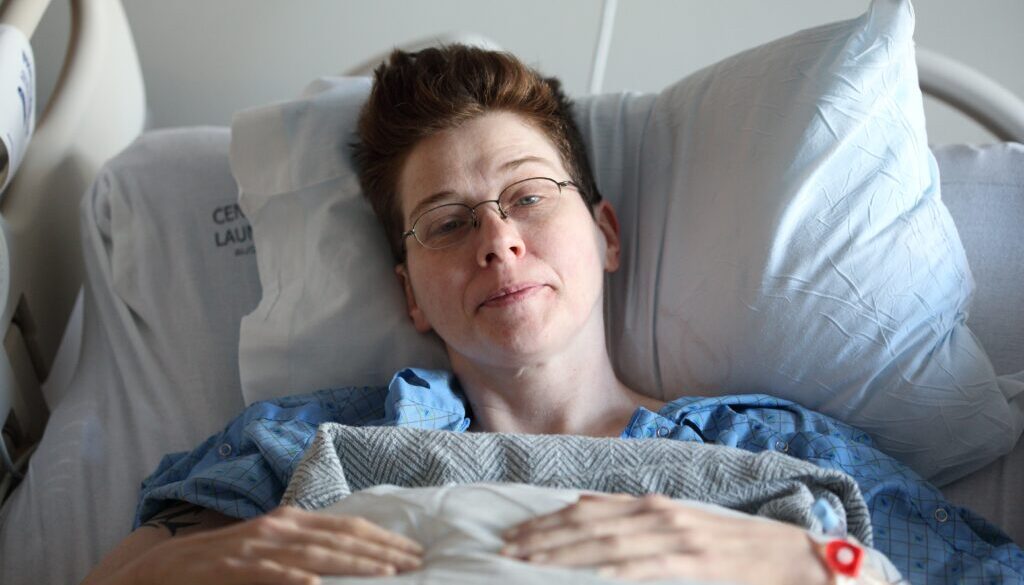
The meaning of Tazria – of both the woman after childbirth and the ‘metzora’ (the person afflicted by tzara’at, a skin condition affecting the individual) – is the implicit and explicit reality of rest and healing. The pandemic has laid bare the many inequities regarding both rest and healing in our society, yet at the same time underscored their importance. Chronic illness has become more readily visible as Long COVID is forcing us to confront the inadequate support for people contending with chronic illness or disability—current estimates for the number of Americans suffering from Long COVID range from 7 to 23 million. Likewise, the needs for adequate mental health support, parental, family and medical leave and other provisions echo what a seemingly outmoded late Bronze Age text advocates for.
The patient narratives in this Parashah are the narratives that we should consciously center: what was their experience? Can we both critically interrogate these ancient texts as well as find surprising virtue in them? What did it mean for these individuals to withdraw from public society and what was the power of ritual to reintegrate them? Leviticus can provide us with deep, meaningful prompts to explore questions of health, sickness and wellbeing in our society. Whatever this pandemic may or may not bring us in the future, we now find ourselves in a moment of healing and reflection. We will be called to reckon with the aftershocks; with pain, trauma, loss and chronic illness. We are invited to seek out for ourselves the places in our lives that may need rest and healing. We are called to build those sanctuaries of healing for all human beings.
Lastly, I will insert a tiny ‘spoiler’ for Naomi’s talk tomorrow. In her speech, she will cross-reference her portion with the story of Miriam’s tzara’at in Numbers, chapter 12. The striking element of Miriam’s illness and isolation is that the entire Israelite community waits for her. They do not leave her behind; they do not forget her. They grant her time, patience and love to heal and be returned to them; they never stopped seeing her in the fullness of her humanity.
So too may it be for us. May the book of Leviticus and the teachings of the ancients remind us moderns of what reminds true: that our human value and dignity is not contingent on sickness or health, on productivity or participation but rather on what we are: human.
Ken yehi ratzon; may this be the Divine will.