Fueling the Fire
TW: frank discussion of Antisemitism and personal experiences of Antisemitism
I was in my early twenties and visiting a friend in Groningen, a quaint historic city in the northernmost reaches of the Netherlands. I didn’t know the city too well but was enjoying my brisk walk through its old center when I saw a troupe of kids surround me. They couldn’t have been older than 10 or 12. They spotted the largish, silver Star of David around my neck and without any hesitation launched into an antisemitic diatribe. They crowded round, their profanities ringing in my ear – and I invite you to turn the sound down if you don’t wish to hear them.
‘Filthy Jew!’ they barbed, their faces contorted in hatred, ‘filthy Jew! Why don’t you go to the concentration camp? Hitler forgot to gas one! Sieg heil, sieg heil!’
What I felt in that moment was not fear, exactly. The overwhelming swell of my emotions was rage. I wanted to respond in kind, but held my tongue, knowing that no good would come from it.
There were other, similar incidents. A man on a bicycle zipping past us on a Friday evening, as we walked back from the synagogue, calling out how Jews are Palestinian baby killers. Even longer ago, when I was enjoying a fun day at a theme park, I saw a band of Neo Nazis bring Hitler salutes on one of the rides. I pressed charges with the police. The police told me nothing could be done. And then there was the time when I was rehearsing with my rather mediocre band, wearing my Star of David proudly, and I went to grab some refreshments at the bar of the studio. As I turned, I faced about five giant-like Neo Nazis, my silver star gleaming at my clavicle. There they stood, like Biblical ‘anakim’, their heads shorn, biceps tattooed with the symbols of hatred, faces mocking.
I felt an emotion I had never felt before and I forced myself to walk out of the building to get some fresh air; deep in my entrails, I felt pure, almost supernatural hatred. I recognized that feeling when I stood on the bimah here only a few years ago and Rabbi Jeff whispered in my ear that there had been a shooting in a Pittsburgh synagogue.
I have thought long and hard on whether I should bring those stories. My experiences of antisemitism are limited, framed through the particularities and privileges of my life. I am acutely humbled by the collective history of our people; by the accounts I bore witness to when I spoke to elderly Dutch Jews who had lived through it all.
I questioned whether I should share about how, when you’re a Jew in Europe, it becomes second nature to take of your kippah when you leave the synagogue, or slip the chain with your Jewish necklace underneath the neckline of your garment, just-in-case.
I wouldn’t say that I lived in fear back in Europe. I vowed to never promote a lachrymose narrative. I never want to highlight prejudice by perpetuating a newer prejudice in its stead: alleging that all Europeans are Jew-haters. My life was impacted, though not crippled, by these incidents but looking back on them now, I have complicated feelings about how I too, inadvertently normalized them. The security guards at synagogues, the gates, the military police accompanying public Jewish events, the checking for bags and the reading of social cues whether one could divulge in one’s present company that one was Jewish.
Why am I talking about this now?
This past week, it was Yom haShoah. As we become further removed in time from the Shoah itself, how we tell our stories in the Jewish community? I held onto these difficult memories, guarding them closely. As a Rabbi, I’ve been wired and trained to look at Judaism through a lens of love; to provide hope when there is little, to encourage positive Jewish self-identification. As Rabbis, we look to Sinai as our defining moment, not our persecution. Yet both are true of course. We are named by our vision and by our loss. Fire burns in our bones and the question remains what kind of a fire it is. Does it generate heat or light? Does it warm or scorch? We can create the space to hold the ambiguities and the unique layers of pain that different Jews may experience.
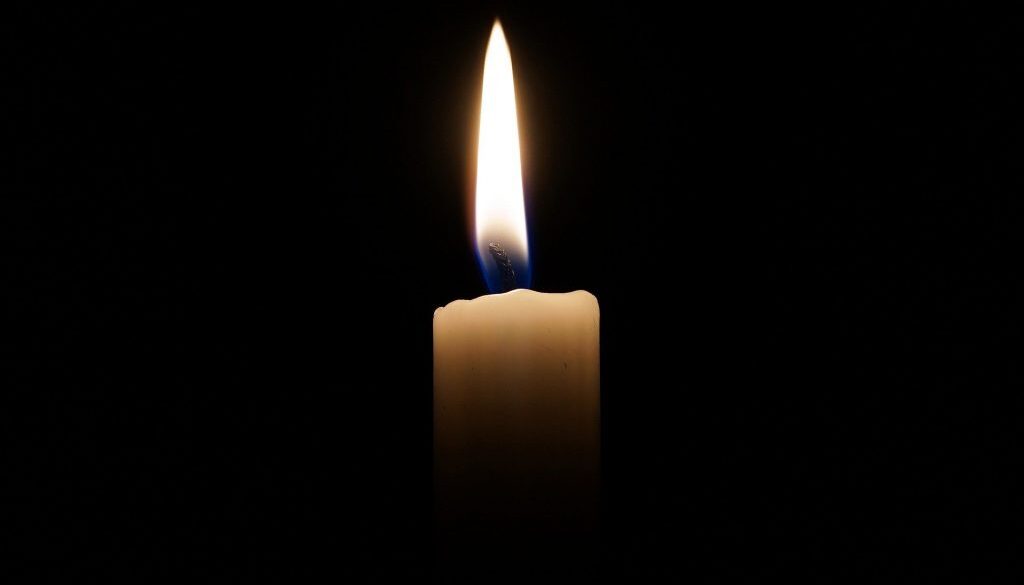
I am reminded of this double-edgedness through our weekly portion, Shemini. Tzav and Shemini are Torah portions that exist side-by-side. Tzav deals with the minutiae of the sacrificial cult, in true Levitical way. Leviticus 6:6 speaks both literally and figuratively in the verse ‘eish tamid tukad al mizbe’ach lo tichbeh’ – ‘a continuous fire shall burn upon the altar – it shall not go out.’ Commentaries seize upon the symbolism of this apparently simple verse. The Jerusalem Talmud (Yoma 4:6) is adamant that this means the fire survived under all circumstances; during the week and on Shabbat; when stationed and when journeying. Other commentaries emphasize the spiritual consequence of an ‘eternal flame’: this refers just as much (if not more) to the fire within than the fire upon the altar. Fire brings life.
Still, in Shemini, fire brings death. Nadav and Avihu, the older sons of Aaron bring an ‘eish zarah’, a ‘strange fire’, or an unsolicited offering, out of what the tradition either interprets devotion or drunkenness. God smites them with fire from Heaven and they perish. Commentators are ambivalent about both the intent and the outcome of this story. Were Nadav and Avihu arrogant sinners? The entitled, spoiled older sons of the High Priest who thought they could get away with it? Or were they spiritually hungry mystics who had no other desire than to purely draw close to the Divine, sealing their communion with an ecstatic but lethal ‘Divine kiss’? In any case, God acts swiftly and calls upon Aaron to sanctify God amidst the congregation, a passage that in itself invites ambiguity. Be what may, Aaron is left deeply scarred and afflicted. ‘Vayidom Aharon’, the Torah tersely tells us. ‘And Aaron was silent.’
We can generate a great deal of thought about that single sentence. How do we process trauma? Especially in this age, when trauma feels so inevitable and overwhelming. How do we come to terms with loss on such a scale that numbers become irrelevant and ethereal. What is the purpose of Aaron’s silence? Is it humility? Contrition? Shame? Something else?
Perhaps Aaron was silent because he needed to create space. Space to fuel the rage, to quiet the tempest, to hover above the quantum field of his inner world, allowing to emerge what must. Space to just be, without judgment, without being recruited in theodicy just yet; without the pressures to synthesize meaning from unfathomable loss. ‘Et lachashot v’et ledaber’, the third chapter of Proverbs tells us, ‘a time for silence and a time for speaking.’
As the years slip by and as our global Jewish community continues to morph and change, continues to be in reaction to and relationship with the non-Jewish world, each of us will have to find our own space in Yom haShoah, in the collective trauma and suffering of our people. Each of us will tell our own stories, when we are ready, and press our Jewishness as a seal upon our hearts; in our own unique and authentic way. In an uncertain and unstable world, we may have renewed fears with regards to the hatred our ancestors experienced and that we try to shield our children from. Perhaps there is wisdom in where space and fire meet; where we can mourn the Nadav’s and Avihu’s of our world and also acknowledge that all of us are called to tend to the holy flames of our innermost being, the sacred hearths of our Jewish souls.
My experiences are not yours; yours are not mine. In that space, I find the humility knowing that I can only bring myself, but no more than that, and live with the knowledge that so much Jewish suffering that I cannot ever approximate. But I can say this to the young woman in her early twenties who boldly wore her Star of David so openly. A fire was ignited in your bones; may it burn bright and may you always place new kindling upon your altar. Among the darkness of death, the heaviness of Yom haShoah, we know that one response is to continue to shine our light. To love our people, to love ourselves, to turn to healing and joy, to renew the covenant each day. Am Yisrael Chai—the Jewish People lives.