Storm-tossed
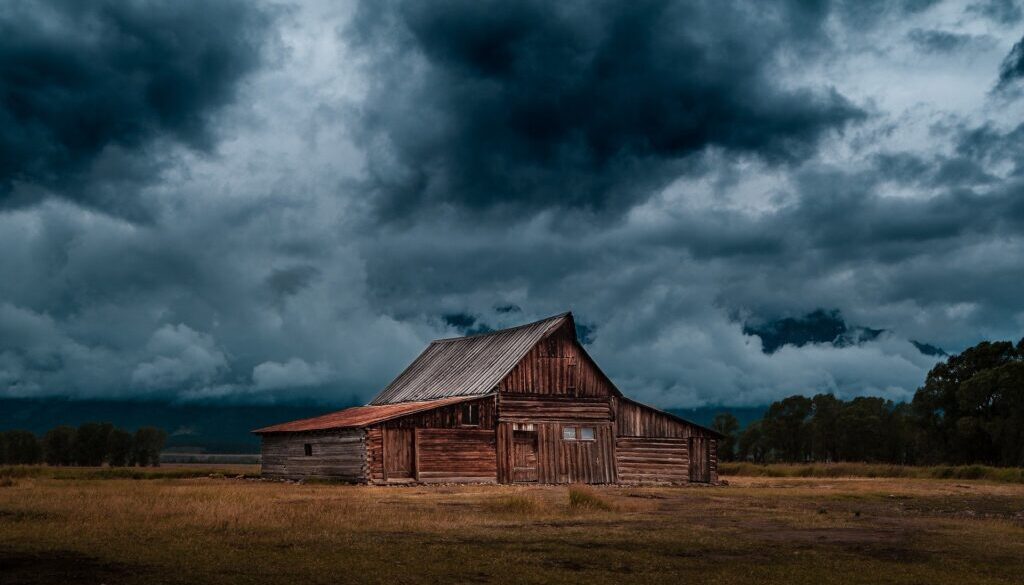
The stars in the sky shone brightly and clearly and I could point out Orion and the Big Dipper to my children on our evening walk. The neighborhood was cast in darkness and we picked our way past downed trees and broken branches by the light of the stars and our flashlights. What I didn’t know that Monday night was that I still would not have electricity or internet by Saturday, this Shabbat, and that the Derecho storm that tore through Iowa would leave unfathomable destruction in its wake. What I did know in that moment is that we had responded to the full force of the storm with lightning speed. We saw the skies darken, the clouds pregnant with force. We grabbed our children, our flashlights and candles (and – I kid you not – a pot of freshly made tea!) and huddled down in the basement, reading Harry Potter. As the winds whipped our house and rattled our windows, with arms wrapped around our children (one feeling adventurous, the younger one understandably more apprehensive), we saw clearly – as clearly as the stars later that night when the power grid came down – what mattered most to us.
Now, we are starting to pick up the pieces, surveying the damage to our cities, towns and fields. My heart breaks for farmers whose crops have been devastated, so many of them already on the brink of economic ruin and mental health crisis before the storm tore through. My heart breaks for the elderly and vulnerable in our cities who are struggling without electricity, who run into difficulties recharging medical devices or accessing medication, water and food. When the sky collapses upon the Earth and the pillars of Creation are pulled from under our feet, we are forced to see clearly. It seems that this hard-nosed, plague-filled year 2020 is determined to pry our eyes open and force us into a great reckoning.
This week’s Torah portion is all about clarity of vision. It is purposeful, prescriptive and dare I say judgmental, as it legislates how we treat the vulnerable, how we should be castigated if we commit idolatry and how we consume meat and the foods ritually permitted to us. It is Deuteronomy at full force; uncompromising and insistent. Fittingly, the portion opens with ‘re’eh’, the second person singular imperative for ‘see!’ The Torah wants us to see; as a collective and, as the Medieval commentator Ibn Ezra states, as individuals also, since the Torah urgently addresses each of us. ‘Re’eh anochi noten lifneichem hayom b’rachah u’k’lallah’ – ‘See! I set before you today blessing and curse.’ This verse alone can provoke reams of commentary. The attentive reader of the text will observe that there is a discrepancy between the singular imperative of ‘re’eh’ – ‘see’ and the plural of ‘lifneichem’ – ‘before you’ (plural), a nuance lost in the English translation.
There is immense interpretative power of looking at merely one verse, or perhaps even one word.
We are called to see and to internalize: on an individual level, so that we can truly make these truths our own and at a collective level, so that we may move to act in response. The verse following on talks about exactly those consequences: if we keep the mitzvot, we will receive blessings; if we do not, curses will befall us. No adequate theology is ever so trite or toxic, of course, but when retooled to our modern understanding, it helps us to feel the full force of consequence, like a tree collapsing onto a power line.
This week I have been cheerfully cooking my food and boiling my water over the BBQ grill, bathing in cold water and picking my way through a dark house by candlelight. I have never been without power this long in my life and it has been a fascinating study in resilience and resourcefulness. At the same time, we had everything we needed and aren’t suffering too much hardship. There have been precious moments of reading (more) Harry Potter in bed to the kids by flashlight, playing games of Uno and teaching the kids some rudimentary piano skills. I both do not wish to minimize the impact of losing power nor do I want to dramatize living without it for a week and to thoughtlessly reduce economy-shattering events to personal growth experiences is grotesque at best. Still, I cannot shake the feeling that this week living in the 19th century without the creature comforts we take for granted has pried my eyes open even further. There is untold legitimate suffering as well as accrued grievance in the conditions of our plague year, but there are also countless blessings. Family, friends and community are the true capital we should invest in. Neighbors helping each other shift the debris in each other’s yards, checking in with meals and offers of freezer space. ‘I set before you blessing and curse’ indeed.
This year is peeling us like an onion; stripping away ego and pretense, layer by layer. The hard truths of Deuteronomy are paired with the gentle whispers of Isaiah in our Haftarah, its opening verse too, prescient and fitting. ‘Oni’ah so’arah lo nuchama!’ – ‘Oppressed, storm-tossed one, not comforted!’ The comforting ensues in the second verse, of course, ‘I will lay carbuncles as your building stones and make your foundations of sapphires.’ (Isa: 54:11) Isaiah starkly reminds us that this is comfort for the afflicted; that we center rather than hide away those suffering. These times are leaving us tender and vulnerable, open to learning and growth and accountable to action and obligation. We navigate these polarities as trees snapped like match sticks line our streets, as we seek to comfort our fellow Iowans, and as we strive to mitigate their losses.
Av is drawing to a close and Elul is upon us shortly. I pray that we may continue to cultivate moral vision; not turn away from uncomfortable and unsettling truths. I pray that we may continue to heal this land and work towards justice and cut away the callousness of our hearts. We cannot contain the storms of Heaven, but we can temper the tempests of the soul with kindness, community and love.