The Hearts of Parents and Children
(Sermon given in honor of two baby blessings at the congregation).
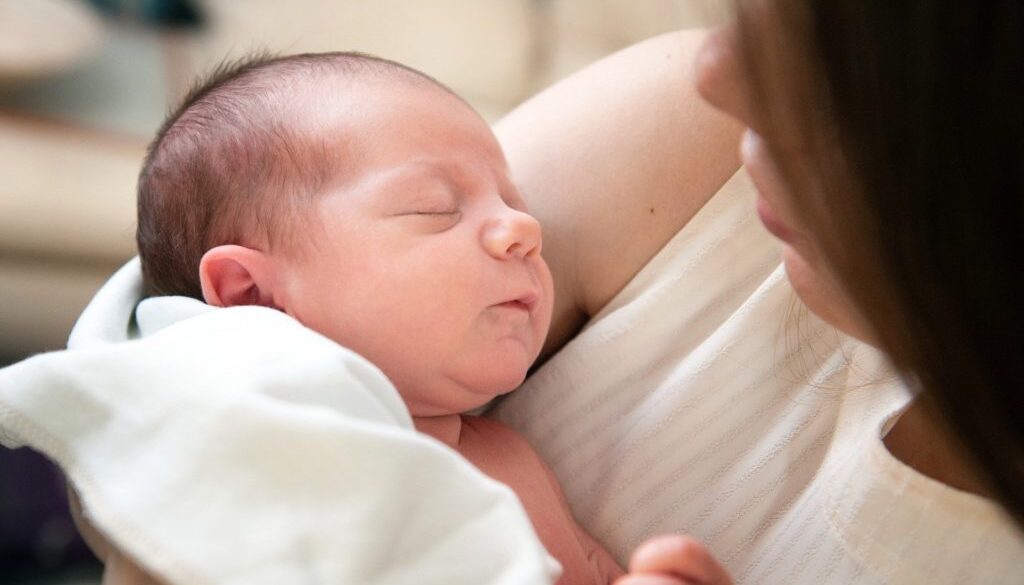
Welcome, families, to the happy occasion of the blessing of your new daughters.
Friends, this is a wonderful occasion as you name babies in front of your community and is a beautiful day to welcome them into the synagogue you have made your home.
As far as Torah portions go, you couldn’t have selected a more apt reading. This is a Torah portion filled with archetypical stories about the relationship between parents and children. As the Torah often does, these are not only lesson lived through great example but also lessons learned through what not to do.
The portion opens with a crisis: Isaac marries Rebecca and they, like Abraham and Sarah, are confronted with infertility. It only takes three verses to paint a complete picture of their marriage, their challenges and their much-wanted pregnancy. ‘Va’etar Yitzchak l’Adonai l’nochach ishto’ – ‘and Isaac pleaded with the Eternal on behalf of his wife’. Already here, we witness the tenderness of the couple.
We may assume that Isaac himself was anxiously yearning for a child and it would have been perfectly understandable if he prayed for himself. Instead, he placed her needs before his, as good partners do.
Rebecca conceives and is pregnant with twins. As she feels the babies wrestle inside of her, she cries out, the world’s first existential philosopher: ‘Im ken lama ze anochi?’, ‘If yes/so, then why am I?’ For her, a highly intelligent woman, pregnancy is not just a physical state but an existential state – a state of deep questioning and self-examination, where veils on a different sense of self are pulled back. Alice and Andrea, this text, too, is rich: it is a reminder for young mothers, in the thick of the physical and emotional demands of motherhood, to remind that mothers are first and foremost a person, a soul and an individual, and that self-care will knit together one’s sense of self as well as the bonds of family. Rebecca’s question and her search with God was the first, prenatal gift of learning she gave her children.
In these texts, we sense the universally-shared hopes of parenthood: of maintaining an emotional connection with one’s partner, holding onto a sense of self in those early years and bestowing love and blessings upon one’s children. And we are only four poignant verses into our Torah portion!
The rest, as they say, is Biblical history. Jacob and Esau are born and make, to the consternation of their Jewish parents, very different career choices.
Jacob was said to have ‘kept to the tents’, which the Rabbinic tradition interprets that he studied in the Beit Midrash, the Study Hall, of Ever. In other words, he probably fulfilled his parental expectations, at least in the imagination of the Talmudic Rabbis. Esau’s fate was more complex: he became a ‘skillful hunter, a man of the outdoors’, ‘ish sadeh’. In Iowa, the literal translation, ‘a man of the field’, would be more fitting. Now, there’s trouble in Paradise, for the mother favors her studious boy, while the father favors his strapping son. We may know the outcome: deception, lies and the pilfering of a birthright from Esau by Jacob. This broken family dynamic would take many decades to heal.
This is where the Torah shifts from an exemplary narrative to a cautionary tale. The brothers become estranged and go their separate ways. What follows are the complicated patterns of behavior that often coil themselves around a family: as father, as son. Deception, heartbreak, disappointment amidst the successes and growth. The family dynamic doesn’t get resolved till two portions over, in Vayishlach, after both Esau and Jacob – now Israel – have matured and found reconciliation in fraternal embrace. Jacob has now been transformed, inculcating the best moral lessons of his grandfather Abraham and his father Isaac. Like Abraham, he is brave and confrontational. Like Isaac, he is emotionally attuned and protective of his family.
At a high-stakes confrontation by the banks of the river Jabbok, the two brothers, despite their military bluster and material grandeur, ran to meet, embrace, kiss and embrace. The Hebrew is terse and intense, a rapid-fire, emotionally-revved up sequence: ‘Vayaretz Esav, likrato, vayichab’kehu vayipal al tza’varav vayshakehu vayiv’ku’ – ‘Esau ran to meet him, embraced, him, fell on his neck and kissed him and they burst into tears.’ (Gen. 33:4). The rest of their relationship is marked by mutual care and concern, not only for each other but also for their families. Jacob settled in a place called Sukkot, meaning booths or coverings, a fitting image of comfort and coming home – full circle from the tents of his parents; a son now a father; a broken man now made whole, the love and dreams of family now both a reality and a legacy.
This, of course, is a messy story. It transcends the clichés of Hallmark cards and pastel colors. A little daunting perhaps, as you, Brandon and Andrea, Jake and Alice, embark on this journey of parenthood. The Torah’s wisdom lies in giving us a full-orbed accounting of family affairs. It is hard sometimes. There might even be heartache. But there will be greater joy and reward for building these sacred relationships in our lives, to care for those baby girls in your arms, and to love them well, as well as you can. The Torah cannot promise you a life without challenges, but it can cast a vision that is deep, rich and fulfilling. A vision of strength and tenderness, of forgiveness and transformation: the family as an incubator for the values that can save the world; all the ingredients of a lifetime of wonder and dreams.
To end with the words of the Prophet Malachi who prophesizes on the redemptive coming of Elijah who will ‘v’hashiv lev avot al habanim, v’lev banim al avotam’ – ‘turn the hearts of the parents towards the children, and the hearts of the children towards their parents.’ May every step on the path of the messy, unpredictable, wondrous lives of your daughters be redemptive: for you as the custodians of her love and for us, as communal witnesses to the blessings your daughters will bring to you, to us and to the world entire. For this we pray. Amen.