
What did the day after look like? Feel like?
We can imagine the giddiness of the crew on their ship: Noah, his nameless wife who the Midrash names as Na’amah, their sons Shem, Ham and Japhet and their anonymous wives. For forty days and forty nights, they had been in the bowels of the ark, as the rains pounded down and the waters of the earth spewed forth.
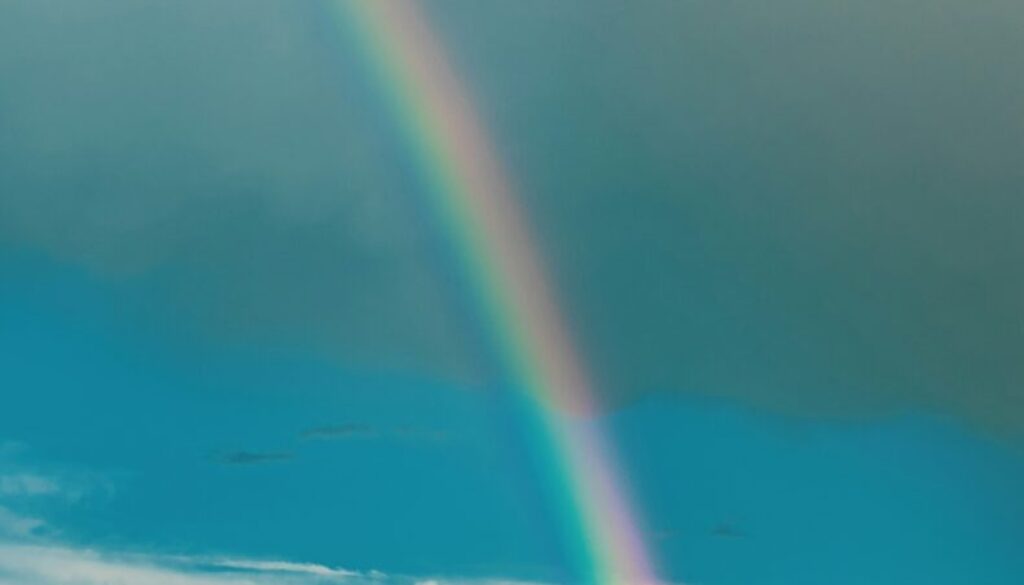
The Torah, as usual, is terse in its description. The humans – and the animals in their care – leave the ark, and almost immediately, God sets a rainbow in the sky as a covenantal marker that the Earth will never be destroyed again. Noah, in turn, brings an offering.
All’s well that ends well, correct?
Well, perhaps not. There are some hints in the text.
After the appropriate offerings of gratitude, one of the first things Noah does his post-apocalyptic world is plant a vineyard. Not a field of wheat and barley, nor a grove of olive or carob trees, but a vineyard. After his grapes are grown, harvested and fermented, he inebriates himself. ‘Vayesht min ha’yayin, vayishkar vayitgal betoch ohalo’ – ‘He drank from the wine, became drunk and uncovered himself in his tent.’
We may remember what happens next. Ham, the middle son, sees his father drunk, discombobulated and exposed and fails to treat the situation with gravity and respect. He runs to tell his younger and older brother, Japhet and Shem, who carefully and modestly cover their father. What once was a celebration of survival now became a painful reminder of all they had been through. In his red-hot anger, Noah cursed Ham. After that, the Torah provides few details except that Noah lived for a further 350 years after the Flood. It is an ignoble ending to a story that started with ‘ish tzaddik v’tamim hayah b’dorotav’, ‘Noah was a righteous and blameless man in his generation.’
Often, in sermons, we focus on what happened before the Flood. We examine, compare and contrast Noah’s character to Abraham’s; we admire his devotion to God and dedication to saving his family and are critical of his non-intervention to save his fellow human beings from destruction. Noah is an honest man, a good man—but is he a hero of faith the way Abraham is? However, less attention is paid to the aftermath. What happens the ‘morning after’, when the waters have receded and the rainbow is arched across the sky?
This is the part we should be thinking about.
If I would analyze Noah through a contemporary, trauma-informed lens, I might argue that he was profoundly traumatized. Not only is he a righteous man, but also a ‘wholesome’ one. Tamim can be translated as whole, innocent, pure or blameless. The word has a tinge of naivite associated with. Abraham had grit; he know how to negotiate – literally and figuratively – out of tough situations. Maybe Noah was a softer, more introverted person. Maybe the ending of the world had broken him. Maybe the burden was too heavy to bear.
It seems like a natural and very human response: we hold ourselves together through the crisis only to fall apart when the crisis resolves and the situation stabilizes. All of a sudden, we have permission to let go; we may crumble or we may soften. But none of us can hold the tension and moral injury of witnessing so much pain in the world. It is not surprising that Noah, the tiller of soil, planted vines to self-medicate his mental state through substance abuse. Looking back on this story, we see it through veils of time and tenderness. We are deeply familiar with such stories in our own lives; we witness these struggles in others or in ourselves. Noah’s wholeness was broken and no pitcher of wine could heal him. He is left vulnerable and exposed, both physically and emotionally. Even when hope comes, in the form of color in the sky and smoke rising to the heavens in thanksgiving, Noah and his family pay a price.
It is impossible to know what happens between now and Election Day. What is possible to know is that all of us have tension, fear and anxiety locked into our bodies. Flood after flood have beaten and battered us. Perhaps, in some ways, we are still on the ark, pining for the receding waters; dreaming of closure and rest. We wish for the hope and healing of better days; and undoubtedly, they will come, but they are not here yet. Perhaps more difficulty lies ahead. But the Noah story invites us to think about our ‘morning after’, about how we will hold and process what we have been through and how we build resilience for the days to come.
The text also carries hints of healing and hope. The dove, rather than the raven, who finds dry land. The togetherness of Noah and his wife as they disembark from the ark. The love of sons and their wives. The care they have given to the animals, who all make it through. The beauty of the rainbow and the comfort of the offering, even when the world seems a wasteland and all seems gone. When the world feels big and dangerous and difficult, these are the small things that keep us grounded. A gratitude practice. The beauty of nature. A connection to the transcendent. Love of family and community. And a vision of the future.
However we disembark from our own arks, I wish us nothing but a safe and quiet space, in the reaches of our own soul, to nurture, recharge and build resilience. To know that among the big things, we are blessed by the small things. And that we have each other, until the end of the world. Let us find the words to describe our experiences, to open up in the fullness of our being, in honesty and vulnerability and the resolve to hold on just a little longer.