
The Moral High Ground
‘Avram yashav b’eretz K’na’an v’Lot yashav b’arei hakikar vaye’ehal ad Sedom’ – ‘Abram dwelt in the land of Canaan and Lot dwelt in the cities of the plain and he pitched his tents until Sodom.’ – Gen. 13:12
This verse, so simple and clear, is pivotal – in more than one meaning of the word. It is pivotal because it is balanced – it draws an immediate parallel between Abraham and Lot in terms of their narrative and character. It is also pivotal because it introduces an important shift – namely that the cities of Sodom and Gomorrah are morally corrupt and any association with them is likely to lead to moral ruin. After all, the next verse tells us: ‘V’anshei Sedom ra’im v’chata’im l’Adonai me’od’ – ‘For the people of Sodom are evil and sin greatly before the Eternal.’
The paradoxical relationship between Abram and his nephew Lot, between the sparse land of Canaan and the fertile plain of Sodom, is symbolized by the ‘vav’ we hear in the Hebrew in both verses. The connective ‘vav’ (meaning both ‘and’ and ‘but’) reveals the points of connection and contrast between the two men. The question that the Torah asks is ‘what is the true measure of a man’? Dr. King provides us with a fitting answer that we will explore when looking at Abram and Lot: “The ultimate measure of a man is not where he stands in moments of comfort and convenience, but where he stands at times of challenge and controversy.”
Dr. King’s wisdom encapsulates both Lot and Abram: Lot is the paragon of ‘comfort and convenience’. In this Parashah, we learn of his eagerness to acquire wealth and gain access to resources – so much so that the tradition soundly condemns him for it. Lot is at best a pragmatist but certainly not a man of principle. Lot chooses for himself ‘the entire plain of the Jordan’ as he and Abram part ways, dividing their livestock and assets and, according to Midrash Genesis Rabbah, also separating from Abram’s ethics and theology. Abram, as we know, possesses the opposite character traits of generosity and idealism.
The Torah’s analysis of Abram and Lot is not that one is perfect and the other is flawed. Abram is a deeply flawed character; at times a trickster and a zealot who places his vision above his family. The question is not then whether Abram is above reproach while Lot is corrupt. The Torah, in her language of geography, maps something entirely different: the terrain of the soul.
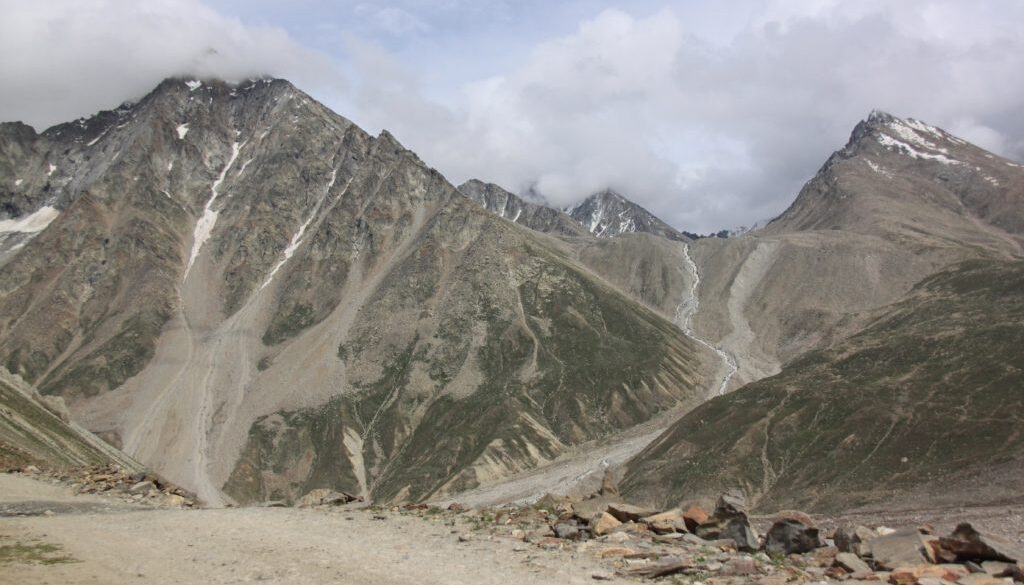
Lot chooses comfort and convenience: the valley of Sodom, so abundant that it is called ‘Gan Adonai’, the ‘Garden of the Eternal’, reminiscent of the primordial Garden of Eden (in, one could argue, both its wealth and its doom). He chooses to descend, literally and figuratively, into the lower regions. Abram chooses challenge and controversy: the land of Canaan, barren and mountainous, culminating in Abram’s fateful ascent of Mount Moriah. Where the Sodom valley yields eagerly to the instruments of greed, the land of Canaan is unrelenting promise and potential that demand hard work and deep trust.
What does it mean for us to map the ‘terrain of the soul’? What can we learn from these symbolic geographies of Canaan and Sodom? Do we fault Lot for choosing to relocate to Sodom? Does that mean that there is no merit to journeying into the heart of darkness in order to bear witness to the light? Lot’s error is not his relocation to Sodom but his acculturation to its vices. Primed by greed as a prosperous herdsman, he offers little resistance to the cruelty of the polity. In a warped, funhouse mirror of his uncle’s impeccable and ethical hospitality, he offers a degenerate version by offering up his daughters to be violated.
Meanwhile, Abram remains on higher ground, observing and intervening with God on behalf of Sodom’s denizens. ‘Sa na einecha’, God tells Abram, ‘please raise your eyes and see’. Abram is invited to scan the horizon of the Promised Land from all vantage points. In the moral geography of his world, he is invited to envision and expand the ethical boundaries of his own understanding and to cement that imperative through the worship of the God Who demands justice, mercy and goodness.
Abram’s choice and Lot’s choice is our choice. If we examine our own hearts, with whom do we stand? The Promised Land or the Fertile Valley? We too are confronted with moral highs and lows and are asked which space we choose to inhabit. How do we relate to the places of evil in our lives? Do we succumb to them, circumvent them or bravely stand in the breach to bear witness and offer them salvation, as Abram did when arguing with God to save the Sodomites?
Commenting on Parashat Lech Lecha, the 19th century Chassidic Rabbi Yehudah Leib Alter of Ger wrote in his seminal commentary, S’fat Emet (‘The Language of Truth’) that ‘human beings were sent into this world in order that all places be restored, that holy sparks be drawn forth from everywhere. This is the meaning of all Abraham’s wanderings from one place to another…’ Abram is told in Chapter 18, in one portion over (Vayeira) when God confides in God’s desire to obliterate the cities of sin, that Abram ‘may teach his children and those who come after him to keep the ways of the Eternal, doing what is right and just…’ – ‘la’asot tzedakah u’mishpat’.
The connective vav of our opening verse is the pivot and fulcrum that confronts us with our own choices. We can choose Canaan or Sodom. Moral corruption or fortitude. Righteousness and justice or evil and sin. Sodom is not just a depression in the landscape of the Jordan Valley but the depths of our own being. As we move through difficult and contentious times, where individuals and institutions betray our trust and mar the sacred callings they are meant to fulfill, that stark choice bears down on all of us. How to exist in a time of challenge and evil is the core question at the heart of this Torah portion. Abram was not flawless, and Lot was not without merit. The difference between them, and the distinction within ourselves, is the intention to raise ourselves up and to cling to that great truth that Abram’s God brought us: we have a choice to exercise our moral agency and we have the obligation to do what is right.